What is a cryptocurrency and how does it work?
A cryptocurrency is a digital asset, which uses cryptography to secure transactions and control the creation of additional units of the currency.
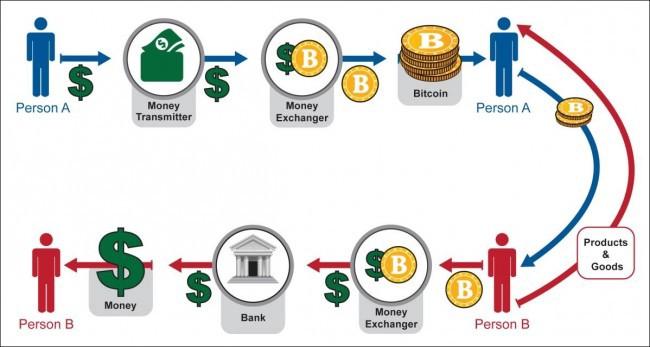
Any two willing parties can exchange money for a new cryptocurrency.
The most popular cryptocurrencies are Bitcoin, Litecoin, and Ethereum. Cryptocurrencies that are relatively new are Dash, Bhero, Monero, Dogecoin, et al.
Here’s a bit more about how they work.
What are Cryptocurrencies?
What is cryptocurrency? Cryptocurrencies are defined by the US Financial Crimes Enforcement Network (FinCEN) as a medium of exchange that is “not issued or backed by a central bank.” Some cryptocurrencies are similar to payment-focused credit or debit cards, while others are more akin to e-mail-based money.
There are generally two types of cryptocurrencies:
Cryptocurrencies that are decentralized, such as Bitcoin, Monero, etc. Cryptocurrencies that are centralized.
To put it more simply:
Bitcoin and other decentralized cryptocurrencies are essentially based on a system of peer-to-peer networking. In this type of system, a peer network makes a decision and then informs all other peers.
The more decentralized a cryptocurrency, the less efficient the network is and the more energy is required for the network to continue functioning.
This peer-to-peer system also poses a risk to user anonymity, since it is possible for hackers to monitor or block users’ transactions.
The majority of cryptocurrencies are centralized, meaning a centralized entity or service controls the creation and trading of the currency.
In this case, there is an administrator of the network, which makes it easy to keep track of every transaction. And if you are not in favor of a given cryptocurrency, you can always leave.
Bitcoin, a decentralized currency, is the most well-known and widely-used cryptocurrency. The concept was proposed in 2009 by Satoshi Nakamoto, who used the pseudonym “Satoshi Nakamoto” for the creation of the currency.
The system uses a distributed network of computer processing and storage to facilitate payments.

In fact, as more people begin to utilize the bitcoin system, more power is needed to maintain the network. Bitcoin mining became too time-consuming for individual users and the network’s security became strained.
Satoshi Nakamoto mined the very first bitcoin in 2009 but gave away his stake in the currency to others, who continue to mine for the sake of ensuring the network’s continued operation.
The most energy-intensive type of cryptocurrency is Ethereum. Ethereum was designed to be more efficient than bitcoin. However, Ethereum is still prone to energy waste.
What is Bitcoin?
Bitcoin is a decentralized cryptocurrency that uses blockchain technology to verify and secure transactions. Bitcoin is one of the most popular cryptocurrencies and one of the most widely used digital currencies. The value of bitcoin has seen major fluctuations.
Bitcoin was created in 2009 by Satoshi Nakamoto. Satoshi Nakamoto is a pseudonym used by the creator of bitcoin. The creator of bitcoin created a new peer-to-peer electronic cash system and released it as open-source software in 2009.
The Bitcoin mining process involves a group of users using their computers to solve mathematical problems. The computers that solve the problems are rewarded with Bitcoin.
These are called “miners,” and the mining process is the backbone of the bitcoin network.
Miners are also essential to the system because they add an extra layer of security that ensures the integrity of the system.
The integrity of the bitcoin network is maintained because no central entity can control the network.
The first generation of bitcoin miners used high-powered graphics cards to mine for Bitcoin.
However, mining with graphics cards became inefficient and resulted in a lot of heat.
Miners began using powerful CPUs and special mining rigs that were better suited to mining Bitcoin.
Comments
Post a Comment